


Skydiving Course: How to Choose the Right One
Someone types "skydiving course" into Google without realizing they're actually asking two completely different questions at once. One person wants to experience the sensation of freefall just once in their life, with no intention of ever doing it again. The other is talking about something entirely different — a structured training program that ends with you jumping solo, without an instructor strapped to you, with equipment you're personally responsible for. This confusion isn't trivial, and it affects every decision that follows — from the price to the number of days you need to block off in your calendar.
People who arrive at this question are usually in the middle of something else: maybe searching for a birthday gift, maybe chasing an old dream they've been putting off for years, or maybe two friends who decided that this time they're not just talking about it — they're actually doing it. In each of these cases, the same practical questions keep coming up: How safe is it? How much does it cost? And how do you prepare for a day like this without showing up completely terrified?
The gap between "experience it once" and "make it a skill" is the most important starting point, which is why it's worth breaking it down before you start checking dates or prices.
Tandem Skydiving vs. a Skydiving Course — The Difference That Actually Matters
Tandem skydiving is how most people in Israel get started, and for good reason. You jump attached to a certified instructor who's responsible for every stage — from exiting the aircraft to landing — and the only thing the first-time jumper needs to "know" is how to breathe and remember to smile for the camera. That's not a compromise; it's exactly how every certified skydiver in the world experienced their very first jump.
A skydiving course is a different story altogether. It's a multi-day, graduated process that includes ground school, body position drills, and progressively more independent jumps performed under supervision. Anyone looking for a long-term skydiving partner — meaning a regular hobby rather than a one-time experience — is generally looking in the right direction here. The most practical question to ask yourself isn't "which one sounds more thrilling," but rather: "Do I want to do this once, or dozens of times a year?"
What Happens on the Day Itself
On jump day — whether it's a solo freefall jump or part of a course — there's a briefing that comes before everything else. You'll learn how to position your body, how to hold the aircraft door, and what to do the moment the parachute deploys. The explanation sounds far more complicated than it actually is, because in practice your body simply locks into the position within a few seconds.
Those who travel from the center of the country or from Jerusalem heading south toward the Dead Sea typically find that the drive itself becomes part of the experience. There's something about crossing through the desert, with Masada rising on one side and the vivid blue of the Dead Sea stretching out on the other, that quietly prepares your mind for the jump — no words needed.
Why the Jump Location Matters More Than You'd Think
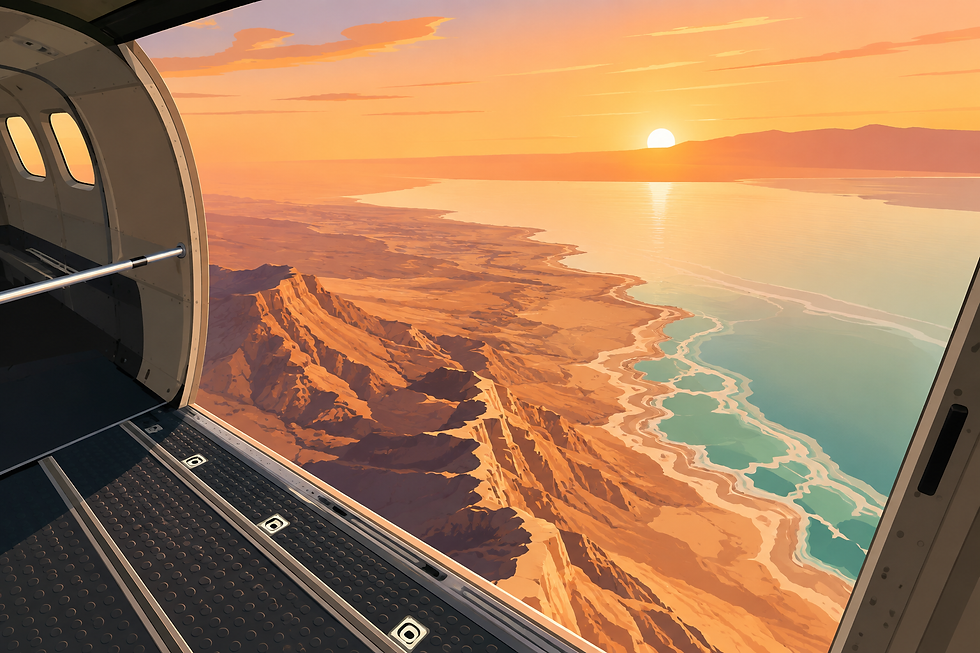
Not every drop zone looks the same from the air, and that's precisely what makes skydiving in the Masada and Dead Sea region something that's hard to compare to anything else. The lowest point on Earth's surface, surrounded by rust-colored desert mountains, with a shimmering turquoise line of water separating Israel from Jordan — this is a landscape most skydivers around the world simply never get to see.
There's a real difference between jumping over a flat green field and jumping over scenery that looks like it was photographed on Mars. The aerial perspective on a jump like this offers a sense of scale that's nearly impossible to achieve any other way, and it's one of the reasons so many people who try skydiving with an instructor in this area come back years later still talking about the experience — not just the moment of the jump itself.
Safety: The Questions to Ask Before Choosing Where to Jump
The most common fear isn't the jump itself — it's uncertainty about who's accountable on the other side. The right questions aren't "are you sure this is safe?" but rather specific, concrete ones: How many hours of experience does the instructor have? When was the equipment last inspected? What happens in the event of strong winds or a sudden weather change?
Professional skydiving clubs don't take offense at these questions — in fact, they'll typically walk you through the answers proactively, before you even ask. Anyone weighing a few options can check, for example, how an operation like gojump.online presents its protocols on its website — not to compare prices, but to see what information is treated as standard and what seems to be missing.
Another common mistake is choosing based on the instructor's age rather than their years of experience. Age says very little about how many jumps a person has logged, and skydiving is absolutely possible for older adults as well, provided their health allows it and there are no medical conditions being overlooked.
How Much Does Skydiving Cost — and Why Prices Vary So Much
The price of skydiving for two isn't fixed, and that causes real confusion when comparing offers. The cost of a skydiving jump depends on several variables: jump altitude, the length of the freefall, whether professional photography is included, and whether organized transportation from a central pickup point is part of the package. Two quotes that look similar on paper can be very different in practice — one might include a full minute of freefall while the other offers thirty seconds.
Anyone looking into the cost of a couples' skydiving experience should check whether there's a discount for a combined booking, since many operators offer a better rate for two people reserving together rather than separately. A skydiving gift voucher is also worth considering — especially as a birthday or special occasion present — because it lets the recipient choose their own date without any scheduling pressure.
Who Should Take a Full Skydiving Course — and Who Just Needs One Jump
Not everyone who loves adrenaline needs to sign up for a full course. For some people, one freefall jump on a special day — an anniversary, a challenge with friends — is exactly enough. And that's completely valid. But others discover after their first jump that this is precisely the hobby they'd been missing all along — and for them, a full skydiving course is the natural next step.
Sometimes the couples who show up "just for the photo" are the ones who enroll in a course within six months, because something about the sensation of freefall takes hold of your mind in a way you don't expect. There's no single right answer here, but it's worth being honest with yourself about whether this is a one-time dream or the beginning of a hobby — because that changes exactly which option you should be looking at and booking.
The bottom line is that one jump — whether it's a tandem skydive or the first step in a skydiving course — doesn't commit you to anything beyond that. Those who want to can stop after the first time with a great story and a lasting memory, and those who feel like something has just begun can simply keep going, one jump at a time.
More articles on this topic:
From our website:
Frequently asked questions
What's the difference between a tandem skydive and a skydiving course?
In a tandem skydive, you're harnessed to a certified instructor who handles every stage — from exiting the aircraft to landing — and no prior experience is required. A skydiving course is a multi-day training program after which you perform solo jumps under supervision. If you're not sure which is right for you, ask yourself one simple question: do you want to do this once, or dozens of times a year?
How much does a skydiving course cost?
Pricing varies depending on the number of training days, what's included in the curriculum, and the altitudes of the jumps covered. A one-time tandem jump is also influenced by factors like jump altitude, freefall duration, and whether professional footage is included. It's worth checking whether there's a couples' discount — some locations offer better pricing when two people book together.
Is skydiving suitable for beginners?
Tandem skydiving is perfectly suited for first-timers, since the instructor handles all the technical aspects. There's a pre-jump briefing that covers the correct body position, and most people find their body adapts to the sensation quickly. The main requirement is that your health allows it and there are no relevant medical restrictions.
What makes skydiving near Masada and the Dead Sea so special?
The aerial views in this region are unlike those at most drop zones in the world — the lowest point on Earth, rugged desert mountains, and a stretch of water dividing Israel from Jordan. That's not just a visual advantage; it's part of the entire experience, including the drive south from central Israel or Jerusalem through breathtaking desert scenery.
A skydiving gift voucher — is it a good idea?
A skydiving gift voucher is a great fit for birthdays, special occasions, or a friend's bucket-list challenge, since the recipient gets to choose a date that works for them. Just make sure to confirm the voucher's validity period upfront and whether it includes professional footage — that varies from place to place.
What safety questions should you ask before choosing where to jump?
Ask concrete questions: how many jumps has the instructor logged, when was the equipment last inspected, and what's the protocol if weather conditions change. A professional drop zone won't hesitate to answer these — and will often volunteer the information unprompted. An instructor's experience is measured in jump count, not age.